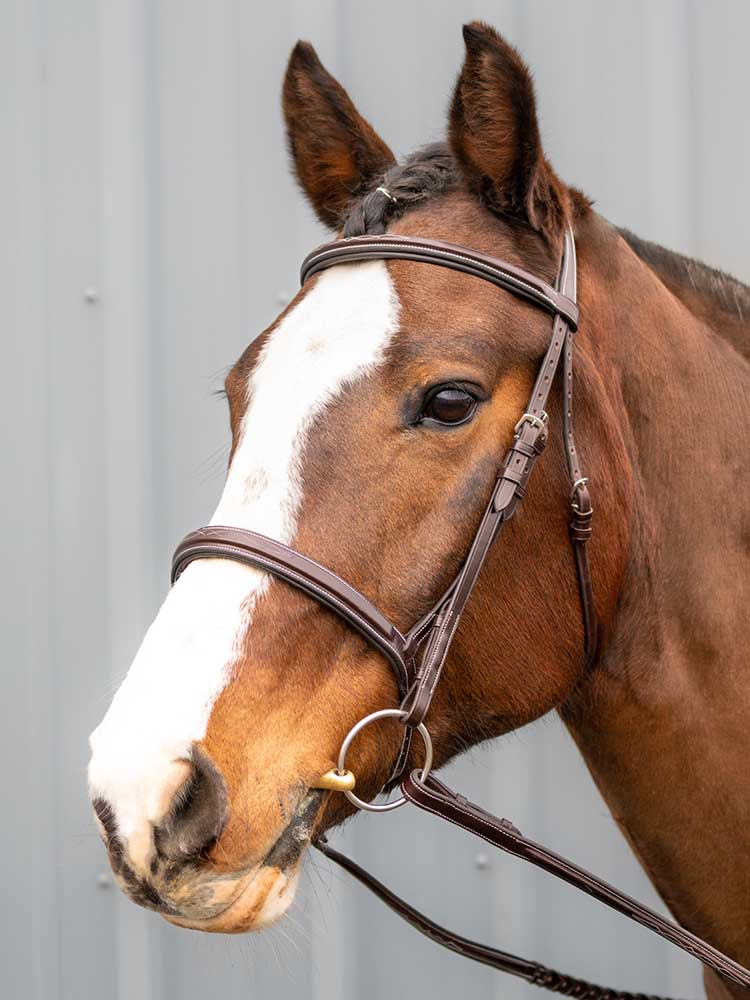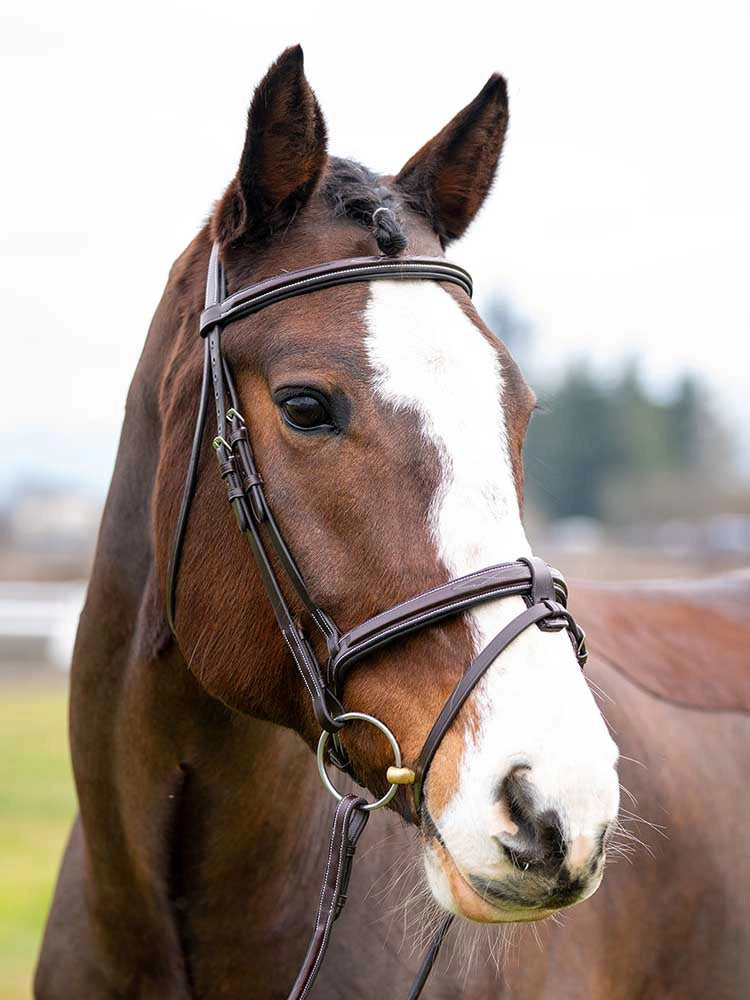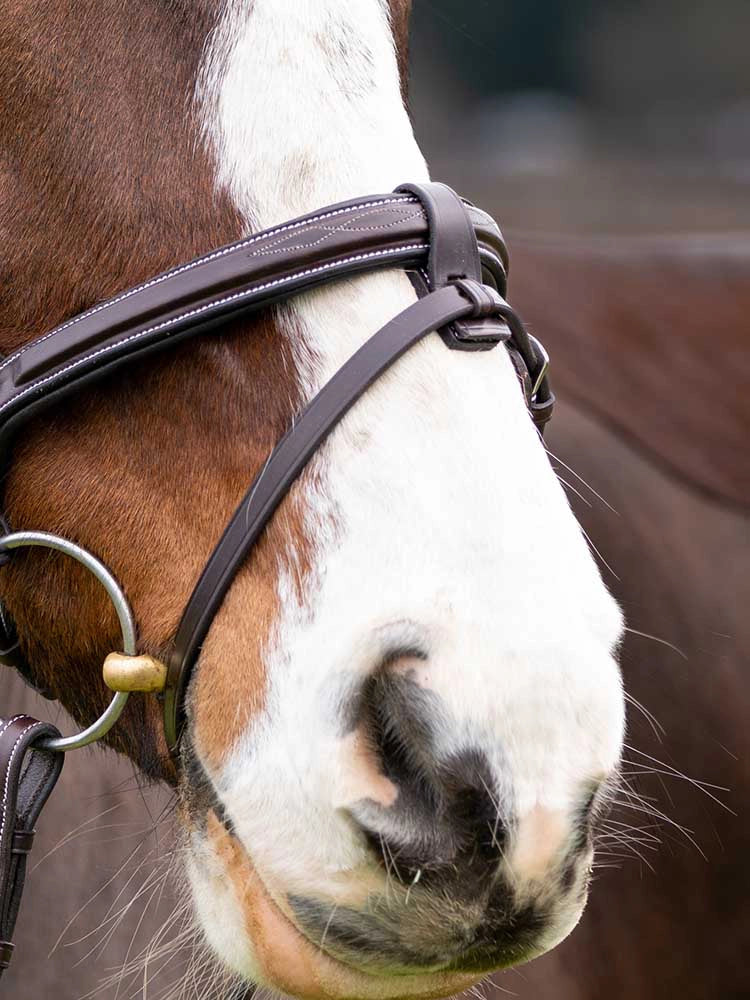


A snaffle bit is a direct-pressure bit. The rein attaches straight to the mouthpiece, so the horse feels the same amount of contact you put into the rein, with a direct line of communication to your horse. That honest, predictable feel is why the snaffle is the bit for starting young horses, and continuing their training throughout their lives.
What a snaffle bit is and what separates it from a curb
Most people assume the dividing line is whether the bit is jointed. It isn't. The thing that defines a snaffle is the absence of leverage, and the thing that defines a curb is the presence of it. On a snaffle, rein pressure transfers to the mouth directly, while a curb includes a shank below the mouthpiece that multiplies your contact and adds action over the poll and under the chin.
Shank length is the multiplier. A longer shank turns a small movement of your hand into a much larger force in the horse's mouth, which is why curbs belong with trained horses and quiet hands. A snaffle keeps the conversation simple while a horse learns what your aids mean.
How a snaffle bit works
When you take up a contact, a snaffle can press on three places at once, the tongue, the bars, and the corners of the lips. The bars are the soft gum space between the front and back teeth, and they're sensitive, so the width and shape of the mouthpiece change how sharp that pressure feels. A wider mouthpiece spreads the load and feels milder, while a thin one concentrates it.
A jointed mouthpiece adds a light squeeze across the tongue as the joint closes. Riders sometimes call that a nutcracker action. A double-jointed snaffle bit spreads the pressure and sits much quieter than the term suggests. Fit does more for comfort with both snaffle styles more than any single design feature.
The main snaffle bit ring types
The ring, or cheekpiece, changes the effect of the bit, how it sits in the horse's mouth, and how it steers more than most riders expect. Here are the four you'll meet most often.
Loose ring snaffle
The ring runs freely through holes in the mouthpiece, so the bit settles into a natural position and the horse can shift it slightly for comfort. Many horses relax their jaw in a loose ring because nothing locks the bit in place. The trade-off is that the moving ring can pinch the lip corners, which is exactly the problem rubber bit guards solve.

Eggbutt snaffle
An eggbutt fixes the rings to the mouthpiece with smooth, smooth T-shaped joints, so the bit stays still and won't pinch the lips. That stability suits horses that fuss with a moving bit and riders who want a steady, quiet contact. It's a sensible all-rounder and a common first snaffle.
D-ring snaffle
The flat D-shaped cheek lies against the side of the face and presses gently there when you ask for a turn. That light steering help makes the D-ring popular for young horses learning to follow the rein. It also sits flush enough that it rarely pinches.
Full cheek snaffle
Long arms above and below the mouthpiece stop the bit sliding through the mouth and give clear lateral steering, which is why full cheeks show up so often on green horses. The catch is that the cheeks need to sit at the right angle to work safely, and that's the job of bit keepers, which hold the upper arm against the cheekpiece. Used without keepers, a full cheek can tip forward and lose the steering benefit you bought it for.

The snaffle bit mouthpiece types that change the feel
The mouthpiece matters as much as the ring, because it decides where the pressure lands and how the horse carries the bit.
Single jointed
One central joint gives that classic closing action across the tongue and bars. It's clear and familiar, and plenty of horses go well in it. Some sensitive horses dislike the point of pressure a single joint creates in the middle of the tongue.
Double jointed
A small central link adds a second joint, so the mouthpiece wraps the tongue and lies flatter. The two best known versions are the French link, a flat plate set on its side, and the lozenge or bean, a rounded center piece, and both spread pressure and quiet the action. That's why many riders move a fussy horse from a single to a double joint, and why a double joint is often the more comfortable choice for everyday work.
Mullen mouth
A mullen mouth is a single gentle curve with no joint at all, so it rests evenly across the tongue. Horses that resent tongue pressure or joint action frequently settle in one. It trades some steering nuance for a steadier, kinder feel.
Material plays a part too. Sweet iron and copper encourage a horse to mouth the bit and produce saliva, which helps acceptance, while rubber and soft synthetics suit a delicate mouth that finds metal harsh.
When a horse gets its tongue over the bit
A horse putting its tongue over the bit is almost always telling you something about comfort, fit, or too much rein pressure from the rider's hands, rather than misbehaving. A bit hung too high or too low invites it, and so does a mouthpiece that presses harder on the tongue than the horse will tolerate. Sorting height and width comes first, because no gadget fixes a poorly fitted bit.
Once the fit is right, a tongue guard gives the tongue a little relief and discourages the habit while the horse settles. Think of it as support during retraining, not a permanent crutch. If the behavior continues, a dental check is worth booking, since sharp points and discomfort often sit behind it.

How to choose the right snaffle bit
Work through these steps in order and you'll land on a sensible bit without guessing.
Step one: Match the bit to the horse and the job
Start with what the horse already accepts and the work you're doing. A young horse schooling on the flat has different needs than a made horse doing lateral work. Pick for the mouth in front of you, not the discipline on paper.
Step two: Start mild and simple
Begin with a smooth, wider, double-jointed mouthpiece in an eggbutt or loose ring before reaching for anything stronger. Mild bits give a horse room to relax into the contact. You can always refine later once you know how the horse responds.
Step three: Set the size and width right
A snaffle should sit with about a quarter inch of clearance on each side of the mouth and create one to two soft wrinkles at the lip corners. Too wide slides and pinches, too narrow rubs. Measure before you assume a horse's size, because heads vary even within a breed.
Step four: Change one thing at a time
If you do adjust, alter a single variable and ride in it for several sessions before judging. Changing the ring style, mouthpiece, and material at once tells you nothing about which change helped. Patience here saves money and confusion.
A bit should never gloss over a training gap, so when a horse stops responding to the leg or the hand, that's a schooling question rather than a hardware one. When you're unsure, a session with your trainer or an independent bitting fitter is time well spent.
One stop for bits, bridles, and everything in between
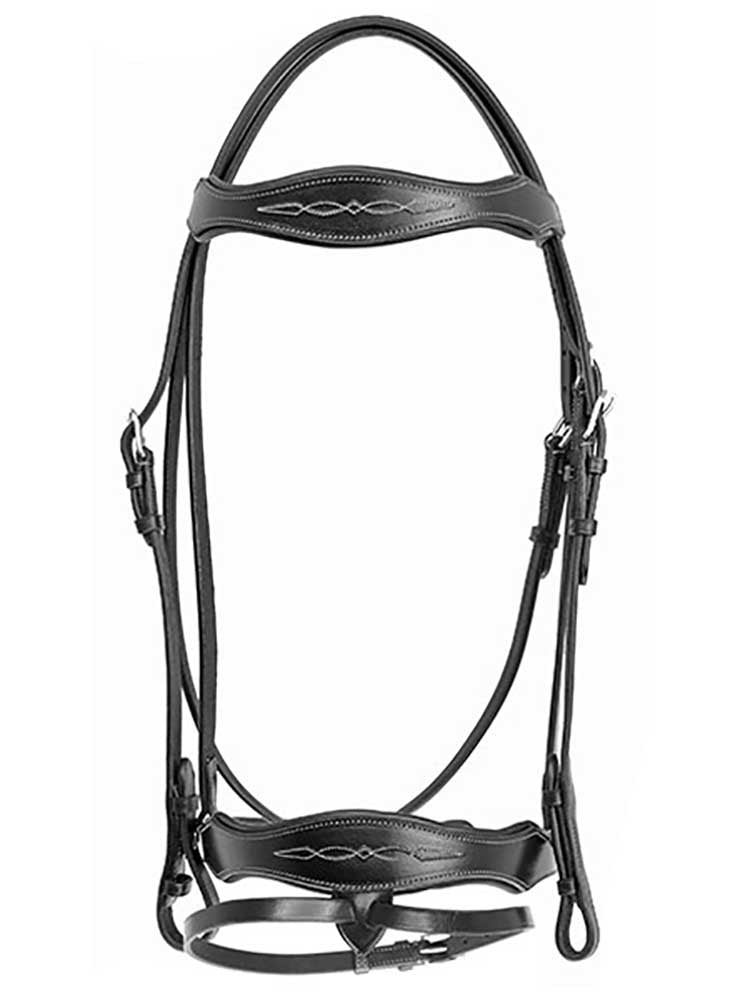
A good bit is only one part of a setup that has to work together, from the bridle it hangs on to the reins you ride with. Grewal Equestrian keeps the bridles, browbands, keepers, and finishing pieces in one place, so you can match them properly instead of piecing a setup together from five different shops. When you're ready to outfit the whole horse, browse the full Grewal Equestrian range and shop your tack, apparel, and stable kit in a single trip.
Snaffle bit questions riders ask most frequently
Is a snaffle bit gentle?
A snaffle is milder than a curb because it has no leverage, but gentle depends on fit and hands more than label. A thin or rough mouthpiece in busy hands can be sharp, while a wide, smooth one in quiet hands sits kindly. The bit is only ever as soft as the rider holding the rein.
What is the most common snaffle bit?
A single or double-jointed eggbutt or loose ring is the everyday starting point for most riders. Both are mild, widely available, and suit a horse learning to accept contact. Many barns and trainers keep one of each on hand for exactly that reason.
Is a snaffle bit good for a young horse?
Yes, a mild snaffle is the standard choice for starting a young horse. The direct, predictable feel helps the horse learn what the rein is asking without the amplified pressure a curb adds. A D-ring or full cheek also gives a little steering help while the horse learns to follow the rein.
Do you need bit guards with a snaffle?
They aren't required, but they help with a loose ring or a bit running slightly wide, where the rings can pinch or rub the lip corners. Guards sit outside the mouth and stop that pinch without changing the action of the bit. Many riders add them as cheap insurance for a sensitive-mouthed horse.