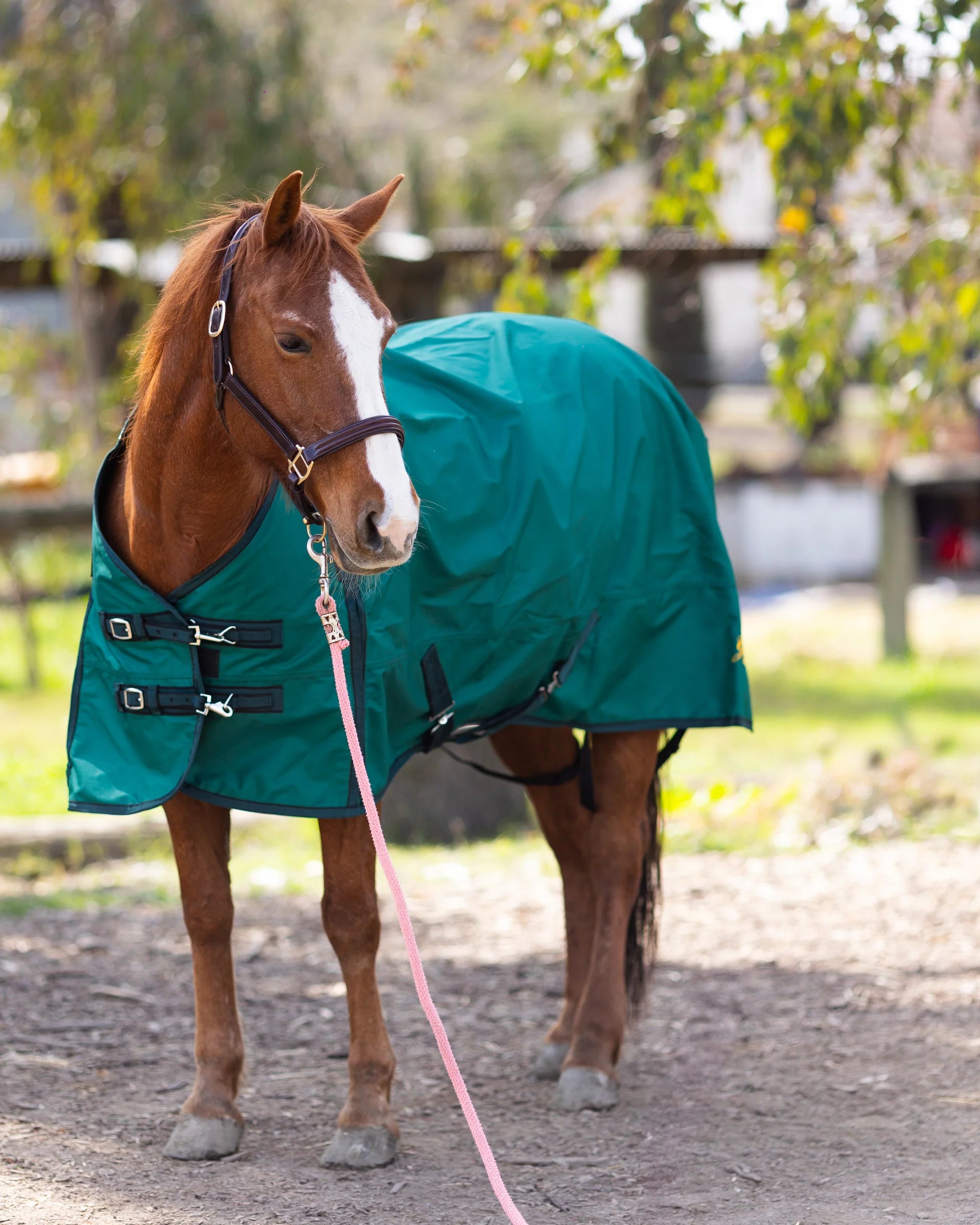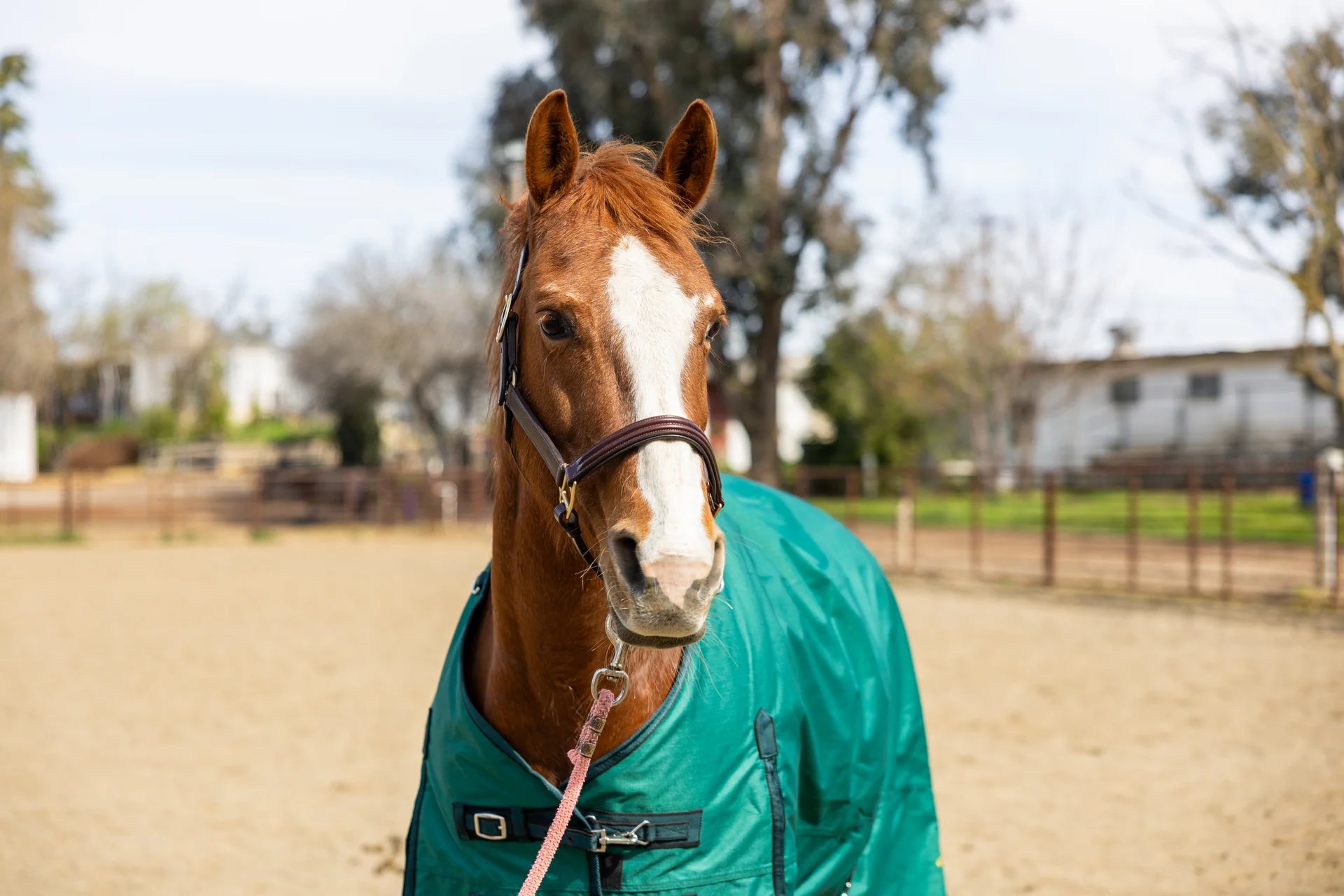


A breastplate sits across your horse's chest and connects to your saddle. Its job is simple but important: keep your saddle from slipping backward. This matters especially during jumping, galloping, or any situation where your saddle wants to shift back with each stride. Horses with sloped shoulders or forward-balanced saddle placements are the ones that need breastplates most. Without one, you're fighting a constant battle to stay balanced.

You'll see different styles out there designed for English and western saddles. Y-shaped designs with elastic straps sit above the chest and connect to the English saddle's D-rings on both sides. Some have running martingale attachments for head control, like the Broadmoor Breastplate with Running Martingale. The western breast collars are also often a Y-shaped design. The Toledo Breastplate is a solid choice for western saddles if you want straightforward design without extra attachments. Each offers flexibility to adjust, but they all do the same thing: anchor your saddle in place.
Here's the thing though. A poorly fitted breastplate won't work. It can rub, restrict movement, or fail to do anything at all. Getting your horse's measurements right before you buy or adjust is the foundation for a piece of tack that actually helps instead of creating new problems.

Key Measurements for Breastplates
You need to know three main measurements. The most important one is the distance from your horse's chest to the girth. The other two help confirm sizing and ensure the breastplate sits right on your horse's frame.
The center-chest-to-girth measurement is what most breastplate sizing is based on. Measure vertically from the center point of your horse's chest, directly between the front legs, straight down to where your girth sits. Small horses or ponies typically measure 24 to 28 inches. Average-sized horses fall in the 28 to 32 inch range. Larger horses often need 32 to 36 inches or more. This single measurement tells you what size breastplate will fit your horse's frame.
For some breastplate styles, especially Western breast collars, you'll also want to measure across your horse's shoulders from point to point. This helps confirm that the breastplate won't sit too high on the neck or too low on the chest. If your breastplate attaches to your English saddle D-rings, measure the distance between the two front D-rings as well. This affects how the attachment straps pull and whether they'll sit even on both sides.
How to Measure Your Horse for a Breastplate
Grab a soft measuring tape and spend a few minutes getting this right. It's worth the time upfront.
Step 1: Saddle Your Horse
Put your saddle on the way you normally would, with your girth in place. Don't cinch it tight, but don't leave it loose either. The breastplate measurement depends on where your saddle sits, so measuring with it in position gives you accurate numbers. If you haven't bought a saddle yet, position whatever saddle you're using in the balance point where you'd normally ride.
Step 2: Find the Center of the Chest
Stand in front of your horse and find the center of the chest, directly between the two front legs. This is where the center strap of most breastplates should sit. Take a moment to identify this point clearly before you start measuring.
Step 3: Measure Vertically from Chest to Girth
Now measure straight down from the center chest point to where your girth sits. Keep the tape relaxed and vertical. Don't pull it tight or you'll get a measurement that's too small. This number is your primary sizing information. Write it down.
Step 4: Measure Shoulder Point to Shoulder Point
If you're ordering a Western breast collar or feel uncertain between two sizes, measure across your horse's shoulders from point to point. You want to make sure the breastplate will sit right at the base of the neck where it belongs.
Step 5: Check D-ring Distance
For breastplates that attach to D-rings, measure the distance between the two front D-rings on your saddle so you know what you're working with. Some English girths don't have a D-ring for breastplate attachment. If yours doesn't, a simple Grewal Equestrian Girth Loop with Leather Guard and a metal snap fixes that problem.

Breastplate Fitting Tips
Once you have your breastplate, fitting it right is what makes the difference between a piece of tack that works and one that just takes up space in your tack room.
The center part that sits on your horse's chest should be positioned just above where the neck meets the chest. Not so high that it pulls on the windpipe or prevents your horse from lowering their head, but high enough that it stays in place and doesn't shift around. You should be able to slip your hand flat between your horse's chest and the center of the breastplate. If your full fist fits with room to spare, the breastplate is too loose. If you can barely get your fingers in, it's too tight.
If your breastplate has a strap that goes over the withers, it should sit loose enough that you can pull it up 3 to 4 inches above the neck when everything is fastened. This prevents it from pulling backward or restricting movement. Adjust this strap evenly on both sides so the breastplate doesn't pull to one side.
The strap that connects to your girth should hang about 2 to 3 inches below your horse's body when standing still. You want enough slack for your horse to move freely, but not so much that they could catch a leg through it. This part takes a little trial and error. Over the first few rides, you'll figure out what feels right for your horse.
Run your hands around the entire breastplate to check for spots where it might rub or pinch. Pay special attention to the shoulder points where bones stick out. If your horse has a particularly bony build, sheepskin covers or extra padding help prevent soreness. The Chambers Bay Round Raised Leather Breastplate comes with padded sections specifically designed to cushion pressure points and protect your horse's sensitive areas. Premium construction matters here, especially if your horse has a bony frame.
Lead your horse forward at a walk and trot to see how the breastplate moves with the saddle. It should stay in place without shifting side to side or creeping backward. If you can have someone lunge you or ride, do it. A breastplate that feels fine at a walk might shift at a trot or canter.
Will a Breastplate Stop My Saddle from Slipping?
Yes, a breastplate will stop your saddle from slipping, but only if it's fitted right and your saddle fits reasonably well to begin with.
A breastplate anchors your saddle to your horse's chest. As your saddle tries to shift back, the breastplate's connection to the D-rings holds it in place. For horses with sloped shoulders, high withers, or round barrels, this is the difference between a saddle that stays put and one that slides with every stride.
Here's what it won't do. A breastplate isn't a saddle fit fix. If your saddle is too wide, too narrow, or just plain wrong for your horse's shape, a breastplate won't solve that problem. What it does is stop the sliding that happens even with a decent fit on horses whose shape encourages backward movement.
To maximize the anti-slip function, make sure your girth attachment is solid. Some girths don't have D-rings designed for breastplate use. If yours doesn't, a Girth Loop with Leather Guard and a metal snap attached to the end of the breastplate's strap that goes to the girth can work. It's a simple fix if you want to quickly snap the martingale to the girth.
Also keep your saddle and horse's back clean and dry before tacking up. Sweat and dirt reduce traction and make sliding more likely. A clean saddle with good contact will slip far less than one covered in grime. For horses with really stubborn saddle placement issues, add a non-slip saddle pad underneath. The combination of a fitted breastplate and a non-slip pad creates multiple layers of protection.
Getting the Breastplate Fit Right
The first time you fit a breastplate, plan on adjusting it over the first few rides. As your horse moves, you'll notice if something feels off or if a small tweak would improve comfort. Give yourself time to dial it in. A properly fitted breastplate becomes so comfortable that your horse moves better and you stop thinking about it.
Ready to get the right fit? If you need both saddle stability and head control, the Makai Breastplate with Running Martingale Attachment combines both functions in one piece. Browse Grewal's full breastplate collection to find the style that works for your riding and your horse's needs.
Measure once, measure right. With the steps above, you'll find a breastplate that keeps your saddle in place and your horse comfortable. Get your measurements dialed in, then head to Grewal Equestrian to find the perfect fit.