

Bit guards are one of those pieces of tack that experienced riders use without much explanation and new riders often overlook entirely. They're small, inexpensive, and easy to fit, which means they rarely come up in conversation. But for the right horse in the right situation, they make a meaningful difference to comfort and how the bit functions in the mouth.
This article explains exactly what bit guards are, why they're used, which horses benefit from them, and what competition rules say about them. If you've seen them on a bridle and wondered whether your horse needs them, this will give you a clear answer.

What Are Bit Guards?
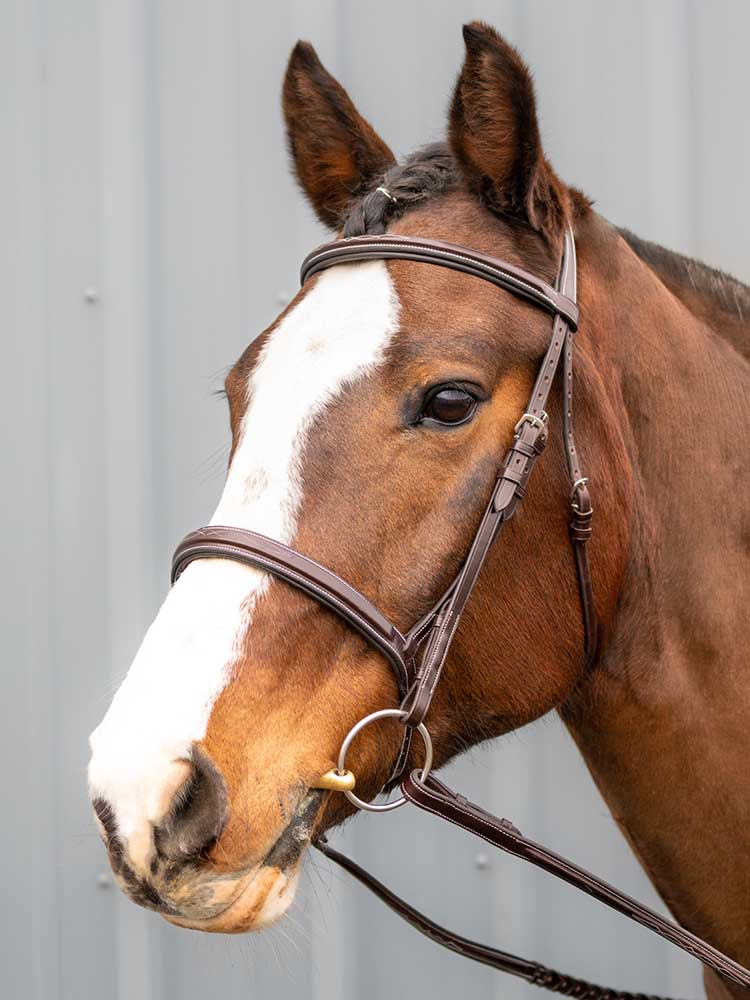
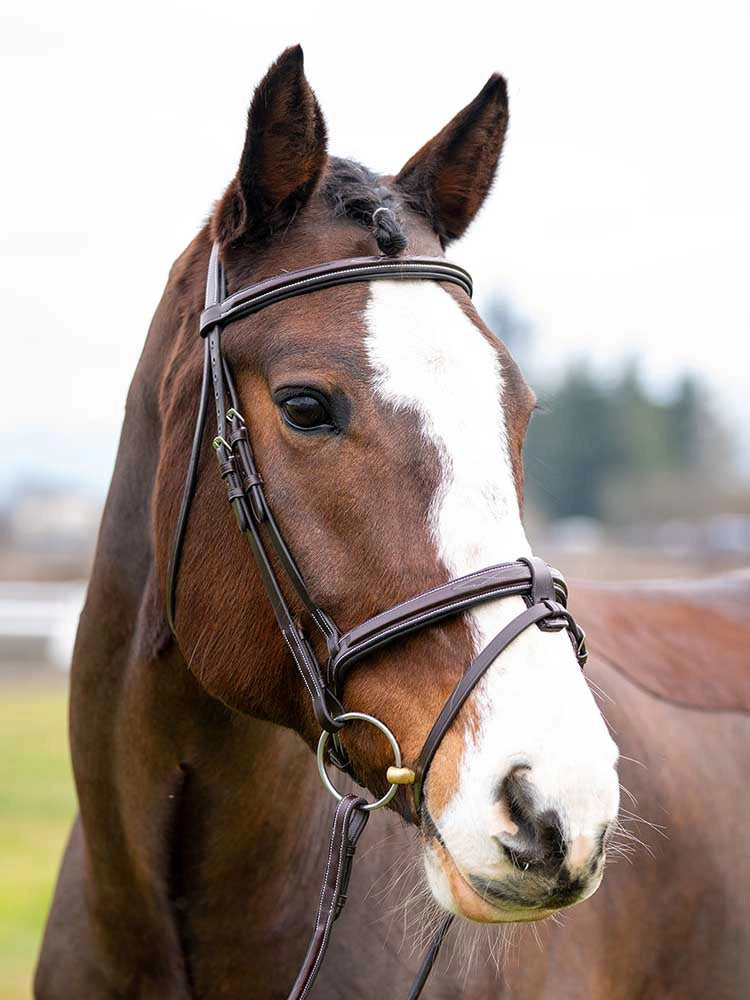
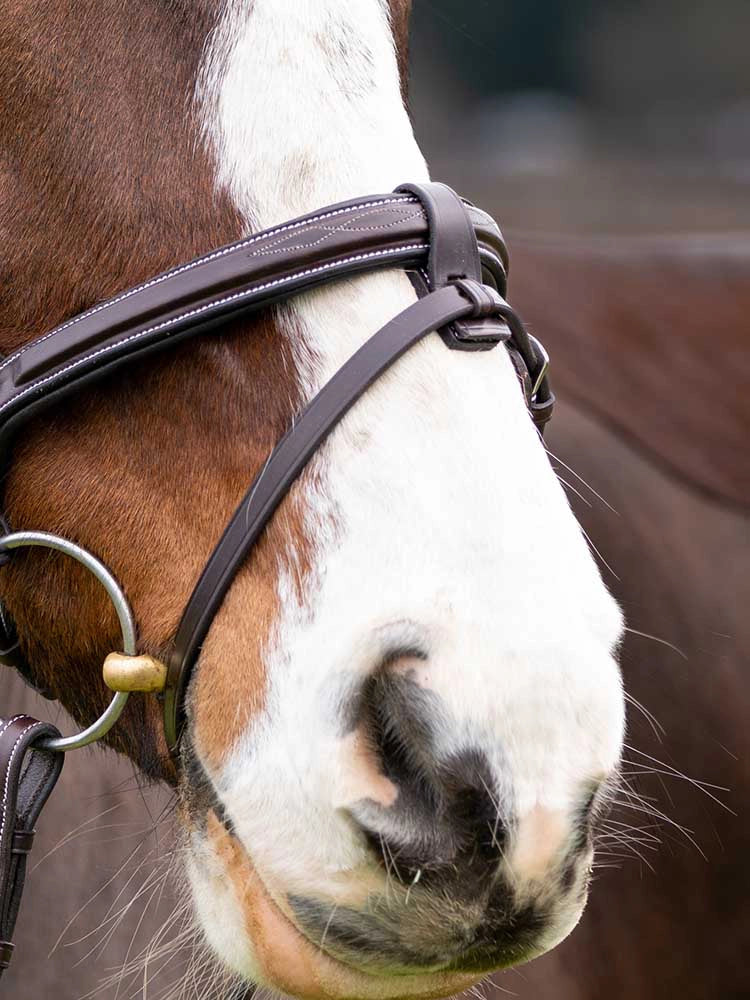
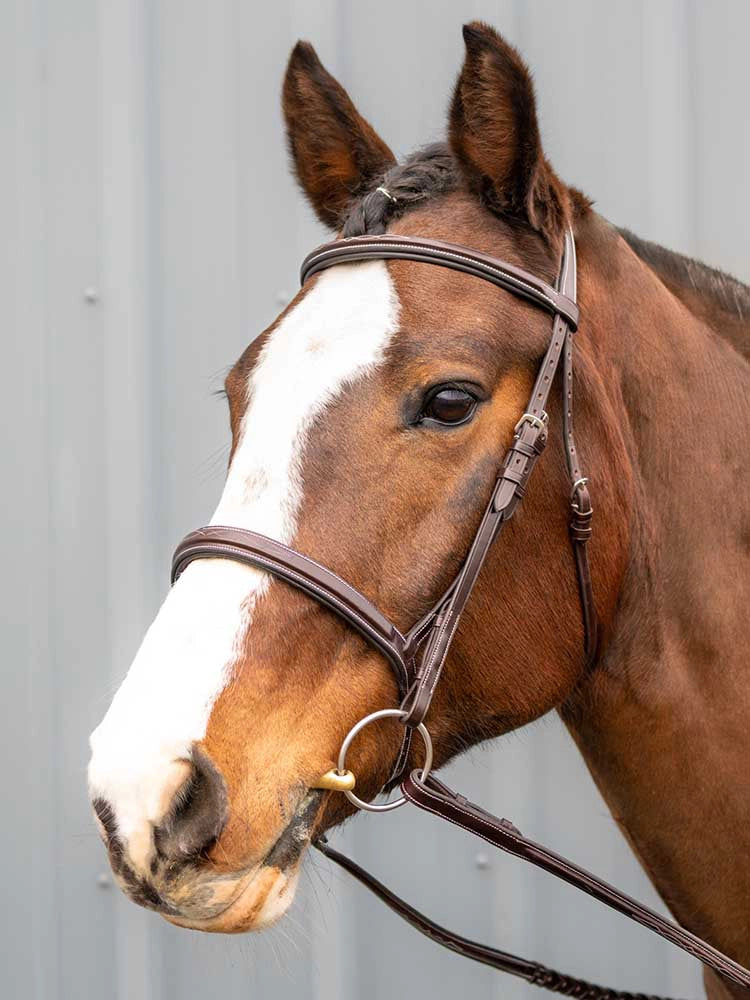
Bit guards are small, flexible discs placed on either side of a horse's bit. They form a crucial part of equestrian tack, designed to sit snugly between the bit rings and the horse's lips. On a typical loose ring snaffle, the bit guard slides over each ring and sits flat against the horse's cheek, creating a cushioned barrier between the metal of the ring and the sensitive skin at the corners of the mouth.
Most bit guards are made from rubber, though gel and synthetic versions are also available. They're sold in pairs, come in black or brown to match tack, and are sized to fit standard bit rings. Installation is straightforward: the guard stretches over the bit ring and stays in position once the bridle is fitted on the horse. Some older-style guards require soaking in hot water to soften them enough to stretch over the ring. Newer designs include a slit or split that makes fitting easier without the soaking step.
The Grewal Equestrian Rubber Bit Guards are very flexible with a small slit that makes sliding them over bit rings significantly easier than traditional one-piece rubber guards. They come in black and brown and fit horses and ponies.
What Do Bit Guards Do?
Bit guards serve two primary functions, and understanding both helps clarify when they're actually needed.
The first is protection from pinching and rubbing the corners of your horse's mouth. Bit guards help prevent the bit from sliding through the mouth and protect the corners of the mouth from pinching, especially with loose ring snaffle bits. On a loose ring snaffle, the rings move freely through the holes in the mouthpiece. That freedom of movement is part of what makes the loose ring a responsive, softly acting bit, but it also means the ring can rotate in a way that catches or pinches the lip. A bit guard eliminates that contact point by sitting between the ring and the horse's skin.
The second function is bit stabilization. Bit guards help prevent a bit from pulling through the horse's mouth. They can also keep a horse from lipping the bit. If a horse is preoccupied by lipping at or chewing on the bit, they are not paying attention to the rider and ready to respond to cues. A guard that sits snugly on each side of the mouthpiece limits how far the bit can travel laterally, which keeps it centered and discourages fussing or mouthing.
There's also a practical fit consideration worth knowing. Bit guards can be helpful if you have a bit that's a little bit too big, by filling out the extra space and stabilizing the bit. This isn't a permanent solution to a poorly fitted bit, but in the short term it prevents an oversized bit from moving around excessively while you source a better fit.
Which Horses Benefit from Bit Guards
Not every horse needs them, but certain situations make bit guards genuinely useful rather than optional.
Horses Ridden in Loose Ring Snaffles
It is sometimes a good idea to use bit guards with a loose ring snaffle. The loose ring is the most common context where bit guards earn their place. The moving ring is what makes the loose ring a popular and effective bit, but it's also what creates the pinching risk. Horses with thinner or more sensitive lips, or those who move more freely in the contact, are particularly prone to rubs and sores at the ring site. A bit guard removes that risk while preserving the action of the bit itself.
Horses with Sensitive or Fleshy Lips
Some horses have naturally more sensitive skin or fleshier lips regardless of color or breed. Horses with very fleshy mouths are more prone to pinching by loose ring bits. Gel bit guards are generally used if a horse is prone to cutting the inside of their mouth, and for horses with sensitive skin, a split corner from a strong ride can take a month to heal. For these horses, a bit guard is preventive care rather than a reaction to a problem. It's much easier to keep the mouth comfortable than to manage a healing sore while trying to maintain consistent work.
Young or Green Horses
Young horses are still adjusting to the presence of a bit and often move their mouth more actively during early training. That movement increases the likelihood of the ring catching the lip. Bit guards provide protection during the break-in period and help keep the early experience of bitting comfortable. Some trainers also use bit guards on young horses in place of a full-cheek snaffle to provide a mild lateral stabilizing effect without committing to a fixed-cheek design.
Horses Who Lip or Fidget with the Bit
If a horse is preoccupied by lipping at or chewing on the bit, they are not paying attention to the rider and ready to respond to cues. Preventing this distraction can help the horse become more responsive. Bit guards reduce the amount of movement of the bit itself. For some horses, this reduction in stimulation is enough to settle the mouth.
Which Bit Types Use Bit Guards?
Bit guards are used with loose ring snaffle bits, gag bits, some western bits, and pelham bits. They're most commonly associated with the loose ring snaffle, but any bit with a ring that can move or rotate against the lip is a reasonable candidate.
Eggbutt snaffles, D-rings, and full-cheek snaffles have fixed cheeks that don't move against the lip, so they don't typically need bit guards. The fixed design already prevents the pinching that bit guards are intended to address. Using bit guards on a fixed-cheek bit isn't harmful, but it's generally unnecessary.
Rubber bit guards are suitable for most horses, except for those that produce little to no saliva. In such cases, the bit guards can rub against the corners of the horse's mouth and cause discomfort. When the horse naturally has a normal to high saliva production, rubber bit guards generally pose no problems. This is a useful distinction. A dry-mouthed horse may actually experience more friction with a rubber guard than without one, so it's worth monitoring closely after introducing them for the first time.
Rubber vs. Gel Bit Guards
Rubber is the standard and the most widely used material. It's durable, affordable, and works well for the majority of horses. Rubber guards hold their shape, stay in position on the bit ring, and provide consistent protection without adding significant bulk.
Gel guards are softer and more pliable. They're often recommended for horses with particularly sensitive mouths or for horses that have already developed soreness at the corners. The softer material conforms more closely to the horse's lip and creates less friction than a firmer rubber guard.
The practical difference comes down to the horse's individual sensitivity. For most horses, a quality rubber guard is sufficient. For horses with a history of mouth soreness or known sensitivity, gel is worth trying.
Competition Rules When it Comes to Bit Guards
This is where riders need to pay close attention, because the rules are discipline-specific and the consequences of getting it wrong are significant. Bit guards are forbidden in recognized dressage competitions and in three-day events. This applies at both USEF and FEI levels. When it comes to FEI-sanctioned dressage competitions, bit guards are explicitly prohibited. The official reasoning is that they can act like a tongue plate, altering the function of the bit in a way that goes against the sport's principles.
If you school your dressage horse at home with bit guards on a loose ring snaffle to protect the lips, that's completely reasonable. But those guards come off before any recognized dressage test or three-phase event dressage phase. This is also worth factoring into your schooling approach: if your horse's bit causes lip soreness without guards and the guards aren't competition-legal in your discipline, the real solution is finding a better-fitting bit or a different ring style that doesn't create the problem in the first place. Bit guards are used more often in jumping events, such as show jumping, and in polo. Always check the specific rules for your organization and level before showing.
How to Fit Bit Guards Correctly
A bit guard that's fitted incorrectly can create problems rather than solve them. The guard should sit flat against the horse's cheek, covering the ring and the junction between ring and mouthpiece. It shouldn't buckle, bunch, or press unevenly against the skin.
Bit guards should sit evenly on both sides and not bunch or twist. They should be secure but not restrict the bit's natural movement. When installing on a loose ring snaffle, ensure the guard covers the ring edges without compressing the horse's lips.
After fitting, check the bit in the horse's mouth while it's tacked up. The guards should lie flat on either side with no visible bunching. Run your finger between the guard and the horse's lip to confirm there's no pressure point. If the guard is sitting proud or pressing the lip inward, it may be too thick or too large for the bit ring size. Bit guards are designed to be a barrier between ring and lip, not a layer of padding pressing the lip against the ring.
Shop Grewal Equestrian's Bit Guards
Bit guards are one of the simplest welfare investments in the tack room. If your horse goes in a loose ring snaffle, has sensitive lips, or shows any signs of rubs or soreness at the corners of the mouth, bit guards are a straightforward fix. Keep a pair on the bit during schooling, remove them for most competitions, and replace them when the rubber starts to age.
The Grewal Equestrian Rubber Bit Guards are flexible, easy to fit thanks to the built-in slit, and come in black and brown to match your bridle. They're a small addition that keeps your horse's mouth comfortable and lets them focus on the work rather than the hardware.
Frequently Asked Questions About Bit Guards
Do I need bit guards on every snaffle?
Not necessarily. Fixed-cheek snaffles like eggbutts and D-rings don't require them because the ring doesn't move against the lip. Loose ring snaffles are the primary use case. If your horse shows no signs of rubbing or soreness and the bit fits correctly, bit guards may not be needed at all. They're a solution to a specific set of problems, not a universal requirement.
Can bit guards affect how the bit works?
They can slightly reduce the freedom of movement of a loose ring by adding bulk at the ring site. For most horses this is imperceptible, but for horses ridden in a very sensitive contact where the subtle action of the loose ring is part of the communication, some riders prefer to work without guards when possible. This is one reason dressage rules prohibit them.
My horse's bit seems too wide. Can bit guards fix that?
Temporarily, yes. Bit guards add some width at the ring and can stabilize an oversized bit well enough for short-term use. But an ill-fitting bit should be correctly sized as the real fix. A bit that's too wide will still move more than it should, and bit guards don't fully compensate for that.
How often should bit guards be replaced?
Rubber bit guards will eventually harden, crack, or lose their flexibility. Check them when you clean your tack. A guard that's gone stiff or cracked can create pressure points rather than relief. Replace them when the rubber has visibly degraded or when they no longer sit flat against the bit ring. They're inexpensive enough that replacing them at the start of each season as a matter of routine is a reasonable approach.
Can I use bit guards on a pelham or gag?
Bit guards are used with loose ring snaffle bits, gag bits, some western curb bits, and pelham bits. The same logic applies: if the ring can rotate against the lip, a bit guard provides protection. Check sizing carefully as pelham and gag rings vary more widely than standard snaffle rings.